By: Vrishika Mehta
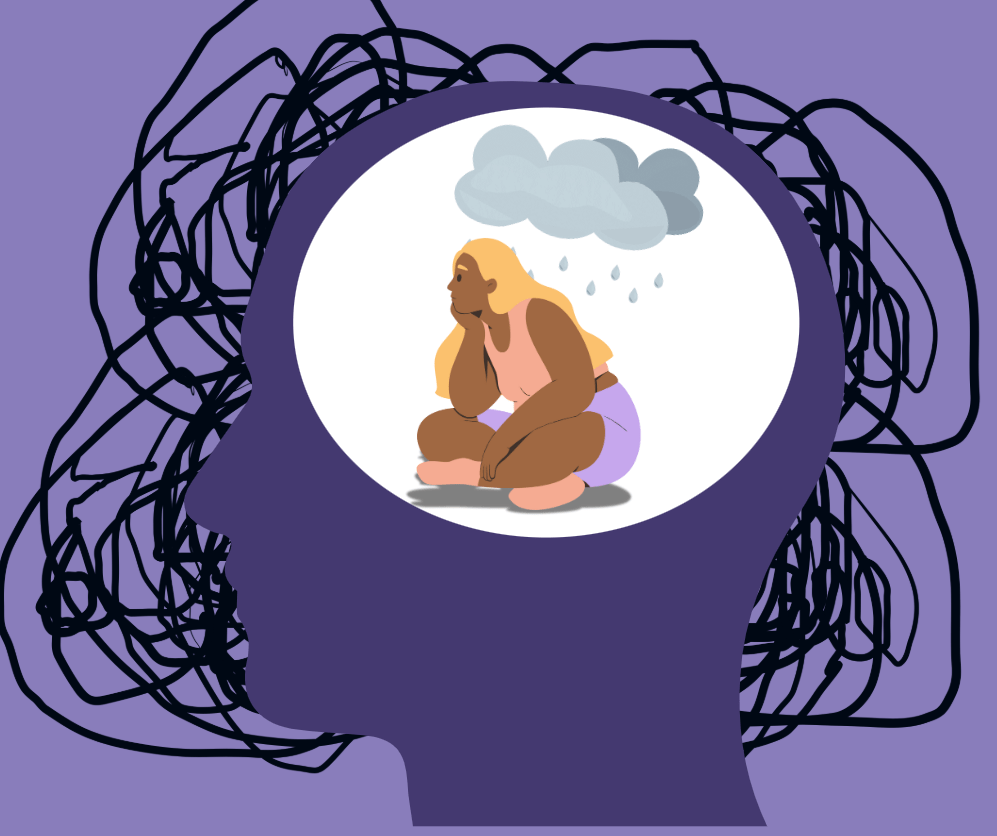
Imagine your everyday life, waking up, going to school, studying for a test, joking around with your friends, and so much more. Now imagine it again, but with yourself trapped in a glass box, watching everyone and everything go on around you. But the catch? You’re watching yourself, too, but on autopilot. You don’t feel real or in control of anything, really; it just feels like a nightmare you can’t seem to wake up from.
Well, that’s the reality for those who struggle with depersonalization and derealization. Don’t know what that means? Well, keep reading to find out through this quick guide on what it is and common mitigation tactics.
What is depersonalization and derealization?
“I’d say it’s like a dream sometimes, yeah, but not in a good way. Feels like I’m sleeping and drifting through the dream trying to wake up and I can’t. ” – Anonymous
Derealization and depersonalization are both parts of dissociative disorders, meaning that the person experiencing them may feel disconnected from both themselves and their surroundings. However, depersonalization and derealization aren’t exactly the same thing.
Depersonalization is feeling as if you are an outsider to yourself; this can involve feelings such as:
- Being emotionally or physically numb
- Having a sense that you’re not in control of what you’re doing
- Your memories lack emotion or feelings
- Feeling like your head is wrapped in cotton
- Experiencing a disconnection to what makes you “you,” such as your memories, behaviors, thoughts, emotions
While derealization is feeling as if you are detached from your surroundings, symptoms may include:
- Feeling that your surroundings aren’t real
- Feeling disconnected from those who care about you, as if you’re separated by a glass window
- Your surroundings feel off
- Thoughts that time doesn’t feel real, such as thinking recent events were forever ago
“Sometimes I would take steps and feel like I was sinking into the floor instead of walking on the ground because I just mentally wasn’t registering my feet on the floor” – Anonymous
You may experience both of them or just one; either way, it’s okay! Episodes can last anywhere from hours to months and may leave you feeling exhausted. This can then go on to impact your relationships with others, academics, and even sleep. Symptoms tend to appear in mid to late teens, and most people are aware of what’s happening but often struggle to explain it or give what they’re feeling a name.
Pause: Did you know about derealization and depersonalization before?
Many who experience either one worry about going “crazy” due to a lack of awareness in regards to the issue. Though remember you’re not alone. Around 2% of the global population experiences depersonalization-derealization disorder chronically, and around 66-70% of us experience it at some point in our lives.
Why does it happen?
While scientists are still actively studying the disorder, there is no specific cause that has been discovered yet. However, in multiple studies, they have found that the likelihood of experiencing depersonalization and derealization has increased in those who have experienced emotional or physical trauma, such as neglect, stressful life events, or drug use. The National Library of Medicine dictates that dissociation is a part of the brain’s effort to block out painful memories, which results in a hard-wired strategy that is meant to reduce anxiety but backfires and creates a feeling of disconnection.
However, experiencing derealization or depersonalization may also be symptoms of another underlying psychological disorder. A lot of people experience transient depersonalization (when it’s temporary and you feel

it from time to time), and this can be a side effect of:
- OCD (Obsessive Compulsive Disorder)
- Bipolar disorder
- Panic Disorder
- Anxiety
- PTSD (Post-traumatic stress disorder)
- Personality Disorders
No matter the cause, there are always ways to get help, and you’re never alone in what you’re facing.
How can you get help?
Having such feelings isn’t always easy to describe, and at times it can be daunting to consider ever telling anyone, we understand. But it’s important that you do to get the support you need; earlier prevention will always help.
“Depersonalization and derealization have a way of making you feel like you’re the only one in the world…but the truth is that you’re not alone” – Anonymous
You can talk to a variety of trusted people, such as your parents, friends, teachers, or guidance counselors. They can all then support you to get the help you need.
*Pause, try making a list of people whom you trust, when and where could you talk to them?
Starting the conversation isn’t always easy, but we’ve got your back. Here are a few tips for when you do decide to open up (you got this!). Remember, they may not all work for you, and that’s okay!
- It’s okay to say, “I don’t know how to explain this.” Try your best to explain, but it’s ok to acknowledge what a challenge it is to describe.
- Consider focusing on expressing how you feel and how it affects YOU, not someone else. When expressing your emotions, use I statements to stay on topic, like “I feel….”
- Use metaphors if you can to explain. Common ones used to describe feeling as if you are not real, being stuck in a glass box watching everything happen, or can’t wake up from a dream.
- Remember, while it can be hard, try to be patient; the other person may not understand what you mean, though they may be trying to understand. Work with them to help them understand.
- Have a goal. Do you want them to just know about it? Provide support? What do you hope to get out of this conversation?
If you’re not ready to tell anyone in your life yet, that’s okay too. However, in the meantime, you can connect online with services through which you can reach out to a certified therapist anonymously. Some of these services are:
It’s not always easy to ask for help, but you’ve got this; you don’t have to carry everything alone. There are always resources to support you.
What treatments are available?
While there is no cure for depersonalization or derealization, there are plenty of treatments to help reduce distressing symptoms
Firstly, Depersonalization-derealization is mainly treated using talk therapy. The goal is to control the symptoms and help you better understand how to work through them. Through this method, you can learn more about coping strategies and various techniques to help you feel more connected to the world around you.

Additionally, CBT (Cognitive Behavioral Therapy) is a type of psychotherapy that aims to help mitigate symptoms of various mental conditions. In CBT, you work with your therapists in a structured way to set goals so that you both know what you’re working towards. In a session, you may focus on self-monitoring to track changes in your symptoms, developing personalized models, or even experimenting with how you pay attention to your symptoms.
DBT (Dialectical behavior therapy) is another option which is more aimed towards those who have histories of trauma to help them explore painful emotions through a combination of mindfulness practices, acceptance, and other cognitive-behavioral tools and techniques.
Medications are yet another option to choose from. The most common medication is SSRIs (selective serotonin reuptake inhibitors). SSRIs are a category of medication which can help treat symptoms specific to depersonalization-derealization disorder by stabilizing mood and
improving blunted emotions.
Remember, just because there is no cure doesn’t mean that there isn’t any hope; there are treatments and resources available to help.
What have teens found helpful?
Coping strategies aren’t always the same for everyone, but it may be worth it to explore what’s worked for others to see if it works for you too! So here are some of the top ways teens around the globe have worked to cope with depersonalization and derealization:
- Using your senses: Oftentimes, people have found that to ground themselves amid a derealization episode engaging their senses has helped bring their mind back the present. This may consist of touching something with specific texture, listening to music, or even humming.
- In depersonalization, a tip often given is to move around physically by clenching your fists, stomping, or even just blinking.
- Often, extreme stress may also trigger depersonalization or derealization, which is why lot of teens also work towards trying to reduce stress; they do this by:
- Deep breathing
- Acknowledging your feelings
- Calling or talking to a trusted loved one
- Reading a book
- If you can, lots of people also find it helpful to know what triggers them. This one is easier said than done, but it may be worth pursuing to help yourself understand patterns in your behavior.
Tips and resources to support others:

Seeing someone struggle is never easy, which is exactly why it’s important to ensure that you’re supporting them positively, helping them through a difficult time.
Though remember it’s important to take care of your mental health too,
you don’t have to be by their side tirelessly, it’s okay to take time for yourself too. Unfortunately, there’s no one-size-fits-all all in terms of providing helpful support. However, there are some tips you can follow.
- Listen with empathy without judgment. Listen to what they’re saying without commenting or judging them for it; it’s not always an easy thing to share. If you’re not sure what to say, you can always validate their feelings. Something as little as “That sounds hard” can mean a lot to a person.
- Don’t try to diagnose them or second-guess their feelings.
- Avoid toxic positivity, don’t immediately dismiss their emotion with phrases such as “Just think positively.”
- Encourage them to seek support and help them find resources to reach out to. Don’t expect to be able to “fix” whatever they’re going through.
- Respect their boundaries and be consistent
Resources for Parents:
As a parent, it’s not easy to support your child the best you can, especially when it’s unfamiliar to both of you. So here are a couple of resources which we think may help:
- KidTrauma | Feelings of depersonalization and derealization
- Depersonalization in Anxious Kids
- How to Help Your Child with Depersonalization and Derealization
- Derealization in Teenagers: Symptoms, Causes, and Treatment
Resources for Educators:
“When I first began experiencing derealization, I didn’t know that was what I was experiencing; I couldn’t put a name to the feeling, I just had periods of feeling like I was in a dream and wasn’t attached to my surrounding environment. Because I didn’t know what it was that I was feeling, I assumed there was something seriously wrong with me.” – Anonymous
As derealization and depersonalization become a more explored topic, awareness is beginning to spread, helping those who experience it put a name to the feeling and prevent them from thinking that they’re “crazy.” Here are some excellent resources that can help teach and fully understand what derealization and depersonalization are:
- Learn About Depersonalization and Derealization | Psychology Tools
- Behind the Desk: Coping with Depersonalization as a Teacher
So what?
Sometimes getting better may seem impossible- a far-fetched fantasy, but reaching out and taking those first few steps towards recovery can make that fantasy into a reality. You’re not alone in what you’re going through, and while
it’s challenging, some people are there to support you. No matter what you think, you are not crazy, and there is nothing wrong with you; your brain simply works a bit differently at the moment, and that’s okay.
Reach out and start the conversation today, you’ve got this!


 Mind4Youth
Leave a comment