
By: Aarya Godse
“If you’re not working, you’re wasting time.” It’s a phrase I’ve heard in different forms, at school, online, and even in my own head. Hustle culture has taught many of us that constant productivity equals success, and that rest equals failure. In a world that glorifies this thought process, we praise for being busy, even when it comes at the cost of our well being.
I have watched a close friend fall into the trap of toxic productivity, where her worth became entirely tied to output. What started as ambition quickly turned into burnout with sleepless nights, constant anxiety, and a deepening sense that nothing she did was ever enough. She stopped smiling, and just worked like a machine. From the outside, she looked successful, but behind the scenes she was exhausted and her spark was taken. But by the time she realized the damage, she barely recognized who she was.
This article explores the hidden dangers of toxic productivity: what it is, why it’s so dangerous, signs and how we can begin to push back against the pressure to constantly “do more.” Because slowing down doesn’t show weakness, it shows that we care.
What is toxic productivity?
Before we get into the deeper issues of toxic productivity, let’s understand what it is. Toxic productivity is the unhealthy obsession with being constantly productive, to the point where it harms your well being. It pushes people to:
- Work nonstop
- Feel guilty when resting,
- Tie their self worth to how much they accomplish
- Disconnect with the world around them
While being productive can be positive, toxic productivity ignores the importance of balance, leading to burnout and stress. Instead of helping us succeed, it traps us in a cycle of overwork and ultimately damages both our mental health and overall performance. Let’s take a simple look at the comparison.
- Healthy Productivity: this emphasizes strategy over struggle and knowing when to take a break and recharge, it is the pursuit of healthy goals and enjoying the work that you do
- Toxic Productivity: this is when one neglects personal well being which ultimately leads to burnout and the enjoyment of working turns into fear
What Causes Toxic Productivity?
Understanding the root causes of over productivity can help us reflect on our own habits and values. Society highly values productivity and is often glorified through hustle culture and social media’s idealized routines. CEOs and influencers promote relentless work, making it easy to feel guilty when not constantly ‘grinding’. Psychologist Kathryn Esquer explains that during stressful times, such as the pandemic, people turn to productivity as a way to regain control and get relief from anxiety. Some more simple causes of toxic productivity include:
- Societal expectations
- School culture
- Personal insecurities
- Imposter syndrome Cycle: people have a fear of not being enough so they try to compensate by over working
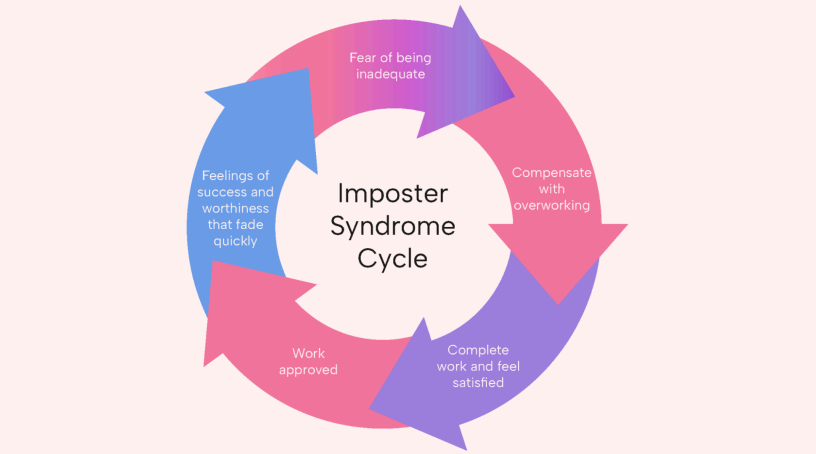
What starts as a coping mechanism can quickly spiral into an unhealthy cycle of overworking and self-pressure.
Symptoms:
- Not spending enough time with friends or family
- Studying or working too much on the weekends, to the point where you don’t have any free time
- Stop prioritizing rest
- Being at your desk for a long time, but not getting much done
- Not doing things you love
- Being anxious and worried over small things
- Feeling depressed, or when life starts feeling monotone
Toxic Productivity in Teen Life
High schoolers and college students are among the most affected with toxic productivity. Between AP classes, extracurriculars, projects and social pressure, doing “just enough” feels like failure. It’s no longer about learning, it’s about constantly proving our value. And with social media, it’s even worse. While scrolling through Instagram or LinkedIn, it’s easy to come across someone your age posting about their 5 a.m. workout, internship, small business, or perfect GPA. Even if you’re already doing too much, it can leave you feeling like you’re not doing enough.
This creates a dangerous mindset: one where rest feels like laziness and burnout becomes the bottom line. Students begin to measure themselves by how full their calendar is, and how much they post on Instagram. The result? A generation that’s overwhelmed, and quietly struggling, all while looking “successful” on the outside.
Real Voices: The Burnout We Don’t Talk About
We have gotten stuck in a cycle of over working. Despite what the hustle culture promotes, more hours don’t mean more results. Slack did a research program and found out that employees/students who work after hours are 20% less productive, which leads to missing out on personal life.
A major survey covered by Vox shows that over half of teens today feel extreme pressure to constantly achieve, plan their futures early, and stand out which leads to widespread burnout. Many report skipping sleep, hobbies, and social time to stay productive, even if it leaves them feeling empty or anxious. One teen described feeling like “an overused machine in a factory,” stuck in a cycle of doing more but never feeling enough. This toxic productivity often shows up as constant exhaustion, anxiety, irritability, low self-esteem, and a loss of joy. The more teens tie their self-worth to achievement, the more they risk burning out completely and forgetting who they are beyond their to-do list.
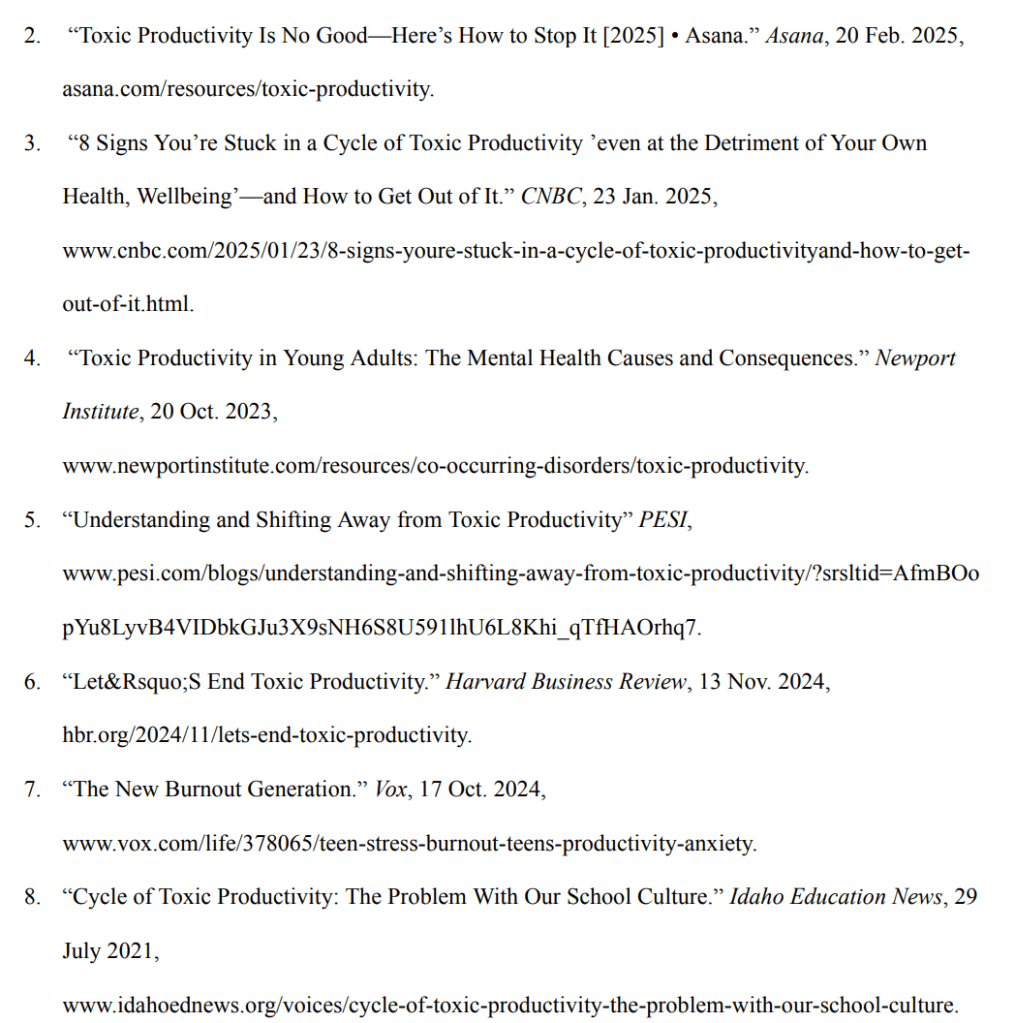
To add on, The Idaho EdNews piece explains how schools often trap students in a vicious cycle and compare themselves with grades.
This isn’t just about statistics, but a real issue.
So… How do we end the cycle
The biggest way of coping with the monster of toxic productivity is to begin to prioritize rest and enjoyment.
- Physical rest: getting 6-8 hours of sleep, drinking water
- Mental rest: taking breaks, journaling, traveling
- Emotional rest: expressing your feelings, talking to friends
- Social rest: hang out with people that bring you joy
Follow the Keep, Stop, Start Rule
- Keep: What do you want to do in the next 30 days, what habits will you keep?
- Stop: In the next 30 days, what do you want to stop?
- Start: What new things do you want to start practicing in the next 30 days?
The Keep, Stop, Start rule will allow you to keep your priorities straight and give you more time to focus on things you love to do.
Some more ways to help cope with toxic productivity include:
- Creating boundaries
- Learn to say no
- Set realistic goals (SMART)
- Take breaks
- Delegate tasks
- Allow yourself to have bed rot days where you don’t do anything
- Seek professional help if needed
You’re not lazy, You’re human
Toxic productivity convinces us that our worth is tied to how much we do, but the research, the stories and our own exhaustion say otherwise. More hours, more meetings, and more pressure don’t lead to better results, but instead they lead to burnout. But now, it’s time to rethink what success really means. True productivity isn’t about doing everything, it’s about doing what matters, with balance. Rest isn’t a weakness, it’s a need. And sometimes, the most powerful thing you can do is slow down.


 Mind4Youth
Leave a comment