
By: Duy Le
“Did I really deserve it?”
“Yes?” “Maybe?” “I’m not sure…”
Especially prominent in teens and young adults, finding solace and contentment with your achievements can be difficult. There is always that lingering feeling of guilt that any accomplishment was not worthy of recognition. Coming from an undergraduate student from the University of California, Los Angeles (UCLA), that feeling never truly disappears even with time and patience. This common phenomenon is known as the impostor syndrome, also coined by researchers Pauline Rose Clance and Suzanne Ament Imes as the impostor phenomenon.
According to the American Psychological Association (APA), the impostor phenomenon is defined as “the situation in which highly accomplished, successful individuals paradoxically believe they are frauds who ultimately will fail and be unmasked.” In other words, it is a phenomenon where people are afraid of being discovered as a “fraud” for their success, feeling undeserved and unworthy.

The impostor phenomenon, however, is not a straightforward concept to grasp. From the Impostor Syndrome Institute, psychologist Dr. Valerie Dang
highlighted and categorized the impostor phenomenon into five
types: the perfectionist, the expert, the soloist, the natural genius, and the superhuman. While they are all classified underneath the impostor phenomenon umbrella, they each have a unique focus.
- The Perfectionist: An individual who believes they could have done better. Knowing that there is a potential to achieve something higher (e.g., receiving a 99 out of 100) will make this individual feel guilty.
- The Expert: An individual who believes they will never know enough. To this person, even a slight lack of knowledge would bring shame and humiliation.
- The Soloist: An individual who feels as though asking for help reveals their phoniness. In other words, the person thinks that tasks must be accomplished on their own to prove a point and their worth.
- The Natural Genius: A person who judges themselves based on getting things right on the first try. Making mistakes on the first try compels them to doubt their abilities and worth in front of others.
- The Superhuman: Someone who feels they need to push themselves to work harder and harder to measure up, even when they already have a lot on their plate.
Individuals may resonate with one or more types of impostor phenomenon. Nonetheless, no matter which one they may identify with, the effects and feelings are the same: shame, guilt, or unworthiness. All of these feelings are attributed to the fear of being exposed as a result of the person comparing themselves to others. Consequently, common effects that sprout from these emotions are the individual avoiding new opportunities, burning themselves out with work, and depending too much on external validation. Unchecked,
these feelings will grow and negatively affect one’s self-esteem
Individuals may resonate with one or more types of impostor phenomenon. Nonetheless, no matter which one they may identify with, the effects and feelings are the same: shame, guilt, or unworthiness. All of these feelings are attributed to the fear of being exposed as a result of the person comparing themselves to others. Consequently, common effects that sprout from these emotions are the individual avoiding new opportunities, burning themselves out with work, and depending too much on external validation. Unchecked, these feelings will grow and negatively affect one’s self-esteem.
Mentioned above, this phenomenon is observed in high-achieving individuals who work in competitive fields and environments, or “particularly those from marginalized groups,” says Brandon Ito, a psychiatrist at UCLA Health. As a first-generation, low-income Vietnamese immigrant, I was no stranger to the impostor phenomenon. Throughout high school, I was surrounded by many bright, ambitious students; above all, I was surrounded by very supportive friends. Despite all of these great individuals, there were several occasions when I felt unworthy of their support and recognition, doubting my abilities and efforts. From passing my AP exams, managing club events, to getting accepted into colleges, I never felt that my accomplishments were truly mine.
Some could say I felt like a fraud.
Even after entering my first year at UCLA, this feeling of worthiness still looms over my head. However, I have found effective ways to combat the impostor phenomenon and shift my mindset in the right direction.
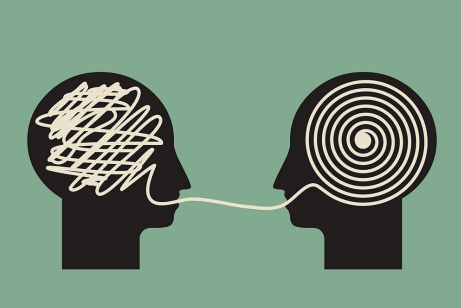
The APA emphasizes that overcoming the impostor phenomenon is very possible! There are seven strategies for combating it: learning the facts, sharing your feelings, celebrating your successes, letting go of perfectionism, cultivating self-compassion, sharing your failures, and finally, accepting it.
- Step 1: Learning the Facts – To address these impostor feelings, the individual needs to recognize the causes that are influencing their thinking and self perception.
- Step 2: Sharing Your Feelings – By entrusting one’s thoughts to other individuals, they can paint an image of how their feelings are impacting their self-esteem and overall character.
- Step 3: Celebrating Your Successes – Although it may be difficult, reminding yourself of your accomplishments is vital to personal growth and development. A useful way to celebrate these successes is to have concrete assurance, such as award certificates or verbal feedback from close ones.
- Step 4: Letting Go of Perfectionism – It is a simple fact: no one is perfect. As hard as people try, there is a point where putting in extra effort would not make a difference. Individuals need to recognize that “good enough” is enough.
- Step 5: Cultivating Self-Compassion – People need to realize that their
accomplishments are not tied to their value. Failure and mistakes are inevitable, so embracing imperfection is crucial to the learning experience.
- Step 6: Sharing Your Failures – Failures are the building blocks to success. By expressing and sharing them, a person can get a better grasp of their journey and overall struggles.
- Step 7: Accepting It – The more recognition you give to your feelings, the less interference you get from the impostor phenomenon. Ultimately, there will always be another opportunity or chance to show your potential.

While daunting, with the proper help and guidance, anyone can overcome the impostor phenomenon, embracing their true character and striving for growth. In
any situation, consulting with a mental health or medical professional is advised to prevent self-diagnosis and further emotional strain.
Now, to answer the question, “did [you] really deserve it?”
Yes! You absolutely did.
Sources

 Mind4Youth
Leave a comment