Helping Teens Conquer Obsessive Compulsions Using CBT, One Anxiety at a Time
By: Anish Paramkusam
Have you ever found yourself double-checking whether you’ve locked the door before bed over and over or stuck in thoughts and routines that you simply can’t shake off? Is it forgetfulness or something that torments you, every single time you decide to ignore it? If all of this sounds familiar to you, you are not alone! Research from the International OCD Foundation shows that more than half a million children and teens in the United States have Obsessive Compulsive Disorder (OCD). But just like how every cloud has its silver lining, OCD is manageable thanks to Cognitive Behavioral Therapy (CBT) and its ability to reclaim your mental peace!

Understanding OCD and Its Impact on Teenagers
OCD is a mental health condition wherein people experience repetitive thoughts (obsessions) and express behaviors (compulsions) to lessen stress. Their way out of the stress is simply doing what makes them feel better, again and again. This can have a severe impact on teens, wherein common habits include repeated checking, organizing, cleaning, or seeking reassurance to ease stress. This greatly impacts their social relations and daily activities. To begin with, they can spend hours making sure that their books are aligned perfectly rather than doing homework. Or, they may be late to class because they constantly keep checking if their lockers are locked. Even sleeping at night can become stressful because of comments about their long sleep time routines.
As a result, teens tend to isolate themselves in order to mask their symptoms. “The longest it ever took me to do my hair was four hours… My spike would be like, it wasn’t perfect–… And everyone’s going to laugh at me (VICE).” says Allison, a 14-year-old teen suffering from OCD. This condition has made her normalize the severity of her actions, it isn’t changing her anymore, it is who she is now.

What Causes OCD and Why Does it Need to be Addressed
OCD in teens can manifest genetically according to research from Psychiatric Clinics of North America with its heritability being approximately 50%. Studies have also shown that the way a teen grows up can cause necessary actions to establish a sense of normality in their lives. Allison recollects how she found out she had OCD all the way back in 3rd grade. She used to reread, rewrite, and re-talk; she knew this wasn’t normal because nobody else was doing it but she “just felt like it had to be done”. Everyday, she spends more than three hours being anxious or thinking about compulsions. She found herself hiding in the bathroom most of the time in school because of how her friends interpreted her rewriting habit back in fourth grade. This shows how individuals, especially teens and young adults, find themselves escaping the stigma surrounding this condition, just to find some peace of mind amongst the battles they fight every single day.

How Parents Can Help Using CBT
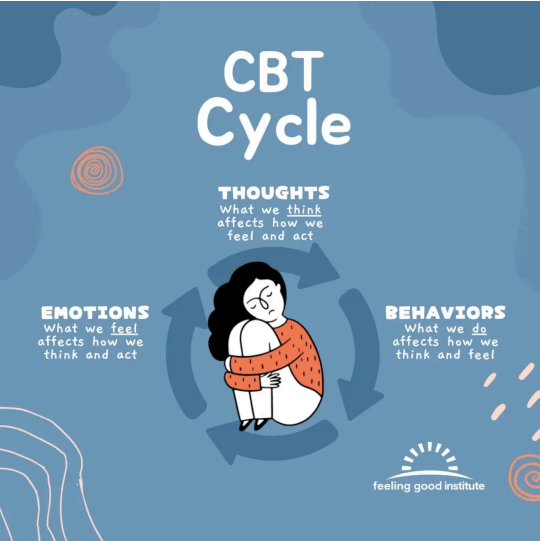
CBT is considered the forefront of OCD treatment, especially in teens. Exposure and Response Prevention (ERP) is a form of CBT that helps the teen identify their intrusive thoughts and find ways to alleviate the challenges that fuel their obsessions. This teaches them healthier ways to cope, significantly reducing their anxiety (“Exposure and Response Prevention: Facing Fears, Finding Freedom”). Teens can build confidence, reduce anxiety, and regain control over their lives with CBT.
Allison’s rewriting obsession was effectively tackled with the help of her mother and ERP. When she was writing a one-line summary of a book, she found that her OCD spiked, causing her to write exactly what she said to her mother, else she would feel that there was something wrong in her head. Therefore, she found a way to manage the stress by recollecting what she said in her mind and if it isn’t exactly what she said, word-for-word, she would leave it like that. Her mother also made sure that she wouldn’t repeat it so that Allison gets to relieve herself in her own ways.
Don’t Forget That You Are Not Alone
You aren’t what you’ve been diagnosed with. Although it can be overwhelming with OCD, with the right support like CBT and a willingness to seek help, recovery is closer than ever! Strength isn’t just about battling those intrusive thoughts, it’s asking for support to take that first step towards healing. Remember, most of the power lies within you and the path to recovery begins with you. Again, you aren’t alone; watch Jenna Ortega as she opens up about her OCD and how she manages it along with these tips to manage it yourself:
- Conquer One Anxiety at a Time: Identify one compulsion that you find to be stressful and work on it with support.
- Write: Journaling can raise awareness within you by recognizing patterns in your OCD. Take it as a tangible piece of progress, every time you write, you find that your symptoms have improved!
- Practice Meditation: To beat anxiety, you must calm your mind first. Use tried and tested breathing techniques and mindfulness apps to relax your intrusive thoughts.
- Reach out: Remember, your battles don’t have to be fought alone. Reach out to a friend, parent, teacher, or counselor and make them a part of your journey to a life where your story speaks louder than your obsessions.
- Contact: Access International OCD Foundation’s support group map to find peer support near you or dial National Institute of Mental Health (NIMH)’s toll-free number (866) 615-6464 to seek help.
The Bottom Line
At the end of the day, the strength to overcome the most tormenting of thoughts lies within you. Your mind may be powerful, but so are you. This journey is realizing that OCD is like steering a ship through a storm; the fear is real but with enough practice and support, you learn that you’re the one behind the wheel.


 Mind4Youth
Leave a comment