
By: Evan Ommen
Introduction:
“Life can only be understood backwards, but it must be lived forwards”
– Søren Kierkegaard
This quote by philosopher Søren Kierkegaard is a part of the foundational beliefs of Existentialist philosophy. Existentialism is a philosophy that focuses on the importance of individuality and gives the task to each human to shape their own existence. As displayed in the quote above, it is important in this philosophy to embrace new experiences by living in the moment, while reflecting on these experiences in the future to learn from them. The key concept of Existentialism that will be referenced throughout this paper is meaning. Existentialists believe that in order to find true happiness one must first discover what creates meaning in their life. I know that these ideas may seem daunting at first, so in this paper I will explain how they can be applied to anybody’s daily life, and be used to combat symptoms of depression.
Dealing with COVID’s Effect on Mental Health:
The COVID-19 pandemic took a major toll on the mental health of youth worldwide. According to the World Health Organization (WHO), the pandemic triggered a 25% increase in prevalence of depression and anxiety, most of which consisted of teenagers and youth. One of the primary reasons for this increase was due to forced isolation. School became online and hangouts with friends turned into FaceTime calls. Everything could be done from one’s bedroom, and so it was easy to lose a sense of purpose. As a result, rates of depression rose drastically, and the need for support grew among the youth. The following quotes were made by international associations during the peak of the COVID-19 crisis, the left one from the Mental Health Commission of Canada and the right being from The Miscarriage Association. Both were issued to the public as reassurance and advice to help deal with personal issues of the crisis.

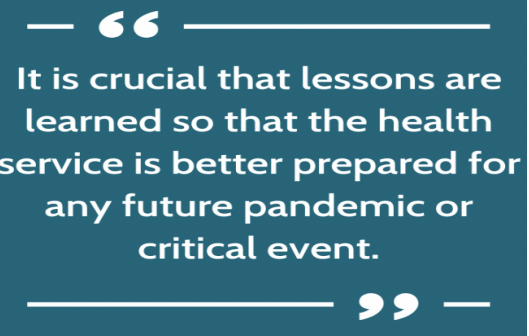
In comparing these quotes to Kierkegaard’s quote of the previous paragraph, the similarities are glaring. The left quote mentions the importance of prioritizing the future steps we take to protect our mental health before we can reflect and seek out information. Similarly, the rightmost quote references the idea of learning from experiences in order to prepare for the future. Organizations all around the world released similar statements during the pandemic, demonstrating the helpfulness of foundationally existential concepts. For those struggling with the newfound isolation and feelings of meaninglessness, statements like these were reassuring as they both connected back to the same key ideas.
Existential Therapy’s Application to Depression:
During the middle of the 20th century, a new form of talk therapy emerged that utilized existential thinking in the therapeutic process. Existential Therapy strays away from the traditional process of immediately diagnosing or curing the mental health issue, but instead works to allow the patient to embrace their challenges and explore the roots of their struggles (NSPC). In summation, the process hopes to assist the patient in finding meaning in their life. Meanwhile, trusted medical research group MayoClinic, lists out major symptoms of depression, including but not limited to:
- Feelings of sadness, which can include crying spells for no apparent reason
- Feeling hopeless or empty
- Loss of interest or pleasure in usual activities
- Feelings of worthlessness or guilt
- Ongoing sense that life and the future are grim and bleak
A common theme of these symptoms is a general lack of direction in life which is precisely what Existential Therapy aims to combat. The goal of the existential therapist is to understand the important aspects of the patient’s life and what brings them the most fulfillment. This therapeutic process was inspired heavily by 19th century philosopher Freidrich Nietzsche. Though long ago, Nietzsche’s existential philosophies are still present in the modern world. Most well known is his “Will to Power” that essentially states that finding meaning can only come from originality. He believes it is impossible to combat hardships until one can grow as an individual and find meaning in their life.
Additional Strategies and Information:
Above are just a few of many examples of the applications for Existential concepts. A fantastic resource that I personally used to learn more is a podcast on Spotify called “The Existentialists”. This is a group discussion between Existential therapists that was created during COVID for the purpose of giving support and knowledge to the public when therapy was less accessible.
Of course, applying these concepts does not work for everybody, and so listed below are other methods from the NHS for combatting depressive symptoms.
Stay in touch
Don’t withdraw from life. Socialising can improve your mood.
Keeping in touch with friends and family means you have someone to talk to when you feel low.
Be more active
Take up some form of exercise. There’s evidence that exercise can help lift your mood.
Face your fears
Don’t avoid the things you find difficult. When people feel low or anxious, they sometimes avoid talking to other people.
If this starts to happen, facing up to these situations will help them become easier.
Have a routine
When people feel down, they can get into poor sleep patterns, staying up late and sleeping during the day
Try to get up at your normal time and stick to your routine as much as possible.
Conclusion:
The most important thing to take away from all of this is to stay true to yourself. Whether you are dealing with depressive symptoms or know someone who is, it is very important to be confident in who you are and the good within you. Meaning and fulfillment will come with this, and from them will come happiness. Try to live your life with a purpose, and remember that your life comes from you and not at you.


 Mind4Youth
Leave a comment