Written By: Liya Patel
Not Just “Teen Mood Swings”
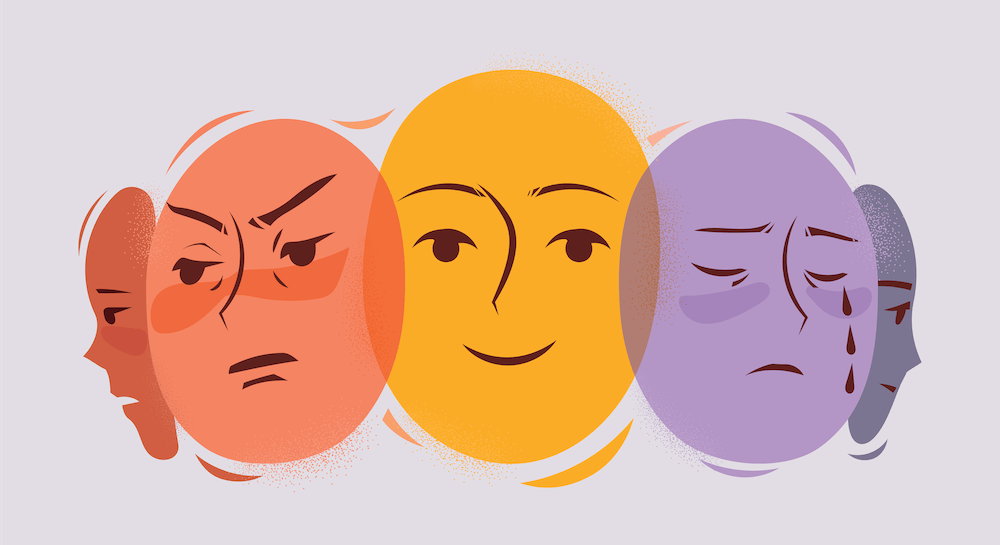
We have all heard it. Someone casually throwing around the terms “manic” or “depressed” or even saying, “Oh, stop being so dramatic. You are so bipolar”. But here’s the truth: bipolar disorder is not just about having mood swings or being overly emotional. These phrases don’t just hurt –they misrepresent a serious mental health condition.
Bipolar isn’t just about having mood swings. Imagine experiencing extreme emotional highs- feeling invincible and filled with energy–only to be followed by crushing lows where you feel hopeless, drained, and detached from everyone and everything around you. This rollercoaster of emotions is the reality for teens living with bipolar disorder, and it can affect every facet of their lives, from academics to relationships to their self-confidence.
It’s time to break the stigma. Teens with bipolar disorder can feel misunderstood, and without treatment, it can affect their lives long-term. The good news? There is hope. And there is help. It’s time we shatter these misconceptions and talk openly about bipolar disorder. Let’s explore what it truly is, how it manifests in teens, and why early diagnosis and treatment are crucial for better and healthier futures.
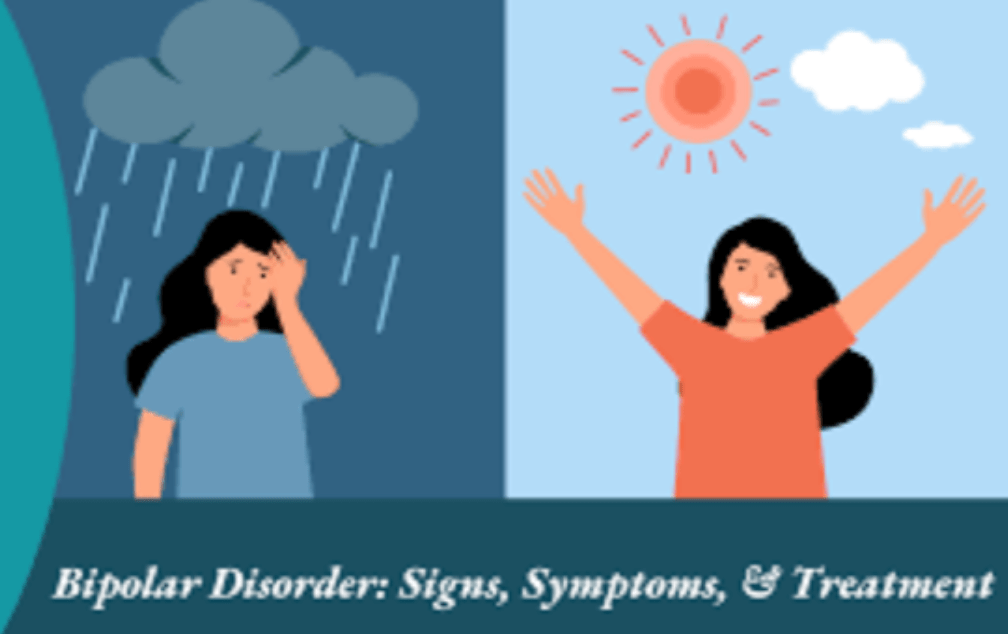
Bipolar disorder consists of both manic and depressive episodes.
What is bipolar anyway?
Bipolar is a mental health condition marked by drastic shifts in mood, energy, and behavior. These aren’t just random mood swings; they come in two primary phases:
- Manic Episodes:
- Over-the-top energy- Feeling like you can do anything with a surge of invincibility.
- Racing Thoughts and Speech- Talking fast and jumping from one thought to another without pausing.
- Sleep disruption – You might feel energized and not need sleep, even if you’re exhausted.
- Impulsive Behavior: You may make quick, risky decisions that you would not usually make, such as Spending money or saying things you wouldn’t usually.
- Depressive Episodes:
- Feeling sad, empty, or hopeless -Feeling disconnected for long periods but not knowing why.
- Struggling with motivation–Viewing things that were once fun as pointless and unappealing.
- Difficulty focusing- Difficulty finishing tasks at school or home, leading to isolation from family and friends.
- Extreme fatigue- Even simple tasks feel exhausting.
However, mood swings don’t always manifest as apparent highs and lows. For some, these shifts aren’t as stark as climbing a mountain one day and plummeting into a valley the next; instead, they can feel like riding a series of waves—some days with symptoms that are subtler and easier to manage than others. Recognizing these symptoms early can help you understand what is happening and receive proper help.
Why is Bipolar Hard to Spot in Teens?
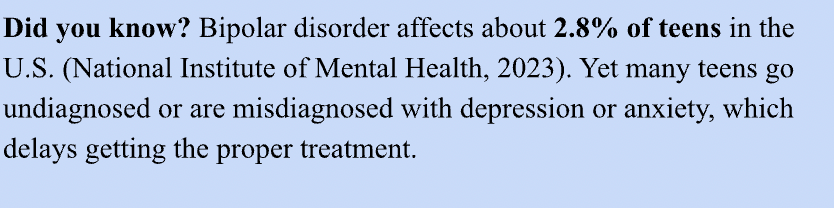
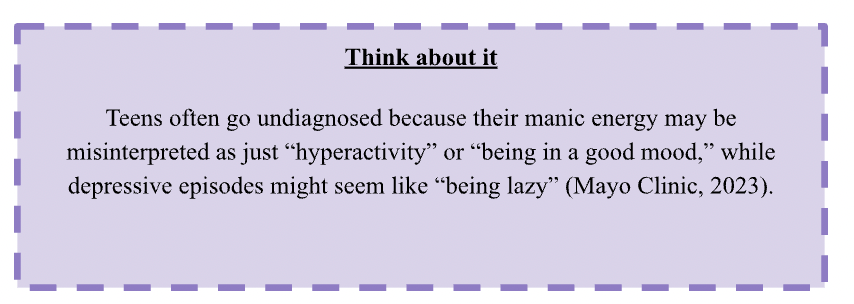
Why is it so hard to catch? Well, l it turns out that bipolar disorder can look like a bunch of other mental health disorders. For example, a teen with bipolar disorder can also have ADHD, leading professionals to misinterpret the real issues at hand. Many teens also mask their symptoms, fearing judgment and misunderstanding—yet another hurdle that makes diagnosis difficult.
National Institute of Mental Health (NIMH) reports that around 2.8% of teens in the U.S. are affected by bipolar disorder. Still, many go undiagnosed because their symptoms are mistaken for something else (NIMH, 2023).
The Impact of Bipolar Disorder on Teens
Bipolar disorder doesn’t just affect emotions—it can impact school performance, friendships, and family relationships. When the high-energy phase hits, they might make impulsive choices that can endanger relationships and academic performance. During depressive phases, they may withdraw entirely, straining connections with friends and family. These mood shifts can affect their ability to connect with peers and family and prevent them from seeking help.

Why Early Diagnosis and Treatment Matter
Time is of the essence! The earlier bipolar disorder is diagnosed, the better. If left unchecked, bipolar disorder can wreck a teen’s mental health. Teens are at risk of substance abuse, self-harm, and suicidal thoughts if they don’t get the help they need (NIMH, 2023).
But here’s the good news: with the proper treatment, teens can manage their symptoms and lead healthy, fulfilling lives. Early intervention helps teens stay on track with their academic goals, maintain strong friendships, and develop healthier emotional coping mechanisms.
How Is Bipolar Disorder Treated?
It is important to understand that bipolar disorder isn’t something that goes away on its own. However, with the appropriate treatment, mood swings can help stabilize, helping teens lead productive lives. Here are the most common treatment options:
1. Medications
- Mood stabilizers (e.g., lithium) can help control extreme highs and lows.
- Antipsychotic medications are sometimes used for severe symptoms.
- Antidepressants might be prescribed, but with caution, since they can trigger mania in some teens (Mayo Clinic, 2023).
2. Psychotherapy
- Cognitive Behavioral Therapy (CBT) helps teens identify negative thought patterns and develop coping skills.
- Family-focused therapy (FFT) works with the family to improve communication and provide support.
3. Lifestyle Changes
Teens can manage their moods by:
- Maintaining a regular sleep schedule.
- Managing stress through activities like exercise or mindfulness.
- Staying connected with family and friends for emotional support and help.
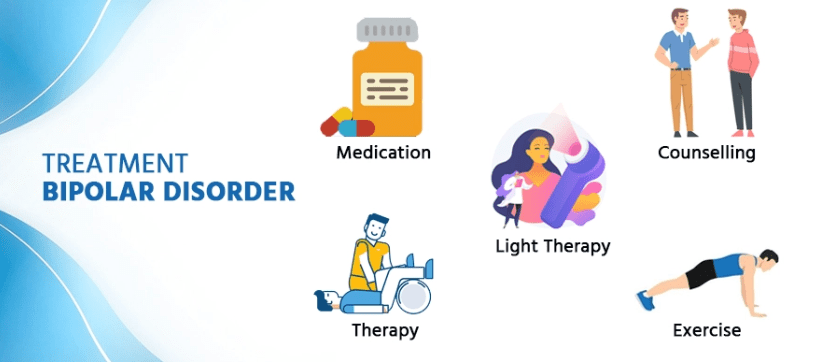
Further treatments for bipolar disorder include medication, therapy, counselling, light therapy, and exercise.
Resources to Support Teens with Bipolar Disorder
There are lots of resources available to help teens manage bipolar disorder. Whether it’s hotlines, therapy, or online support groups, teens don’t have to face bipolar disorder alone. Here are some helpful resources:
- National Suicide Prevention Lifeline: Call or text 988 for immediate help.
- Depression and Bipolar Support Alliance (DBSA): Online support groups and educational resources (dbsalliance.org).
- National Institute of Mental Health (NIMH): To learn more about bipolar disorder (nih.gov).
How Can You Help?
If you or someone you know is experiencing symptoms of bipolar disorder, it’s essential to get help. Talking to mental health professionals, like a counselor or psychiatrist, is a significant first step. Here’s what you can do:
- Talk to a trusted adult: If you’re a teen, contact a parent, teacher, or school counselor. If you’re a parent or teacher, keep an open dialogue with the teen and listen with empathy.
- Start the conversation: If you notice mood changes, try conversing with the teen, but be nonjudgmental and supportive.
- Encourage professional help: A counselor or therapist can help determine if bipolar disorder is the cause of the emotional swings.
The stigma around bipolar disorder discourages individuals from seeking out help. It is important to advocate for change and show support and understanding for various mental health conditions
The Bottom Line: There Is Hope
Living with bipolar disorder can feel overwhelming, but it doesn’t have to define a teen’s life. With early diagnosis, support, and proper treatment, it’s possible to manage bipolar disorder and live a balanced life. So, if you’re struggling or know someone who is, remember—there is help available, and you’re not alone.
Take Action:
If you think you might be experiencing symptoms of bipolar disorder, or if you know someone who is, don’t wait—reach out for help. It’s the first step toward feeling better and taking control of your mental health.
Start the Conversation Today. You’ve got this! And remember, the journey may seem daunting, but there is hope and help. Let’s keep the conversation going and support one another in breaking the stigma around bipolar disorder. Embrace the waves—both the highs and the lows—because there’s always light at the end of the tunnel.
Source list:
- National Institute of Mental Health (NIMH). (2025, February 10). Bipolar disorder. https://www.nimh.nih.gov/understanding-bipolar-disorder
- The Jed Foundation. (2025, February 10). Bipolar disorder. https://jedfoundation.org/
- Mayo Clinic. (2025, February 11). Bipolar disorder: Symptoms and causes. https://www.mayoclinic.org/diseases-conditions/bipolar-disorder/symptoms-causes/syc-20355955
- National Alliance on Mental Illness (NAMI). (2025, February 11). Mental health conditions: Bipolar disorder. https://www.nami.org/about-mental-illness/mental-health-conditions/bipolar-disorder/
- Nationwide Children’s Hospital. (2025, February 13). Bipolar disorder in teens. https://www.nationwidechildrens.org/conditions/health-library/bipolar-disorder-in-teens
- National Institutes of Health (NIH). (2025, February 13). Articles: Bipolar disorder. https://pmc.ncbi.nlm.nih.gov/articles/PMC10579682/

 Mind4Youth
Leave a comment